Stylish Storage Solutions
Set of 2 Parker Rectangular Boxes – Silver – Couture These striking rectangular boxes, crafted with hand-applied cracked eggshell and silver leaf, provide a stylish and practical storage solution for any room. Stack them...
Adding on to your home is one of the most exciting projects you can take on as a homeowner. It’s also one of the easiest ways to spend significantly more than you planned, make decisions you’ll regret in three years, or create a beautiful new space that doesn’t quite connect with the rest of the house. The difference between those outcomes almost always comes down to how well you understand your materials before the first nail goes in.
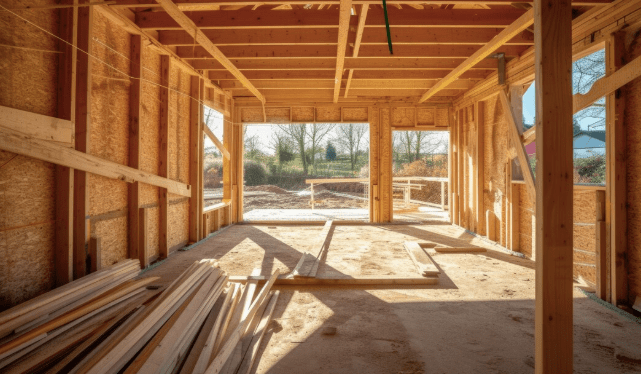
This isn’t about becoming a contractor overnight. It’s about knowing enough to ask the right questions, push back when something doesn’t feel right, and make choices that hold up long after the crew packs up and leaves.
This is the one most homeowners skip, and it’s the one that causes the most problems. Before any addition gets built, your existing roof needs a real inspection. Not a glance from the driveway. An actual assessment of what’s up there.
Here’s why it matters: additions change how water flows off your home. New rooflines, new valleys, new connections between old and new structures all create opportunities for water to find its way in if the existing roof isn’t sound. If your shingles are already ten to fifteen years old and showing granule loss, soft spots, or lifted edges, you’re looking at roof leaks or replacement anyway. Better to know that before your addition is framed and tied in than after.
On the material side, asphalt shingles remain the most common choice for residential additions because they’re cost-effective and easy to match. But if you’re in a hail-prone area or want something that will genuinely last, Class 4 impact-resistant shingles are worth the upgrade. Metal roofing, once primarily commercial, has made serious inroads in residential construction and offers a 40 to 70-year lifespan with very little maintenance. If you’re building something significant, it’s worth pricing out.
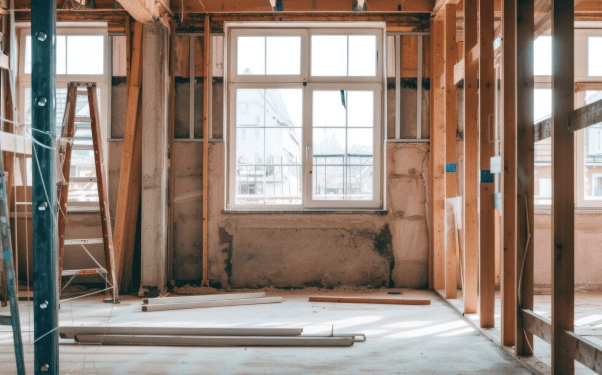
The bones of your addition determine everything else, so this is not the place to cut corners. Engineered lumber, like LVL beams and I-joists, has largely replaced traditional dimensional lumber in quality additions because it’s more dimensionally stable. It won’t warp, shrink, or twist the way standard lumber can as it dries, which means your floors stay flat and your doors stay plumb years down the road.
For foundation work, know what you’re connecting to. A crawlspace addition connects differently than a slab, and neither one should be assumed to match your existing structure without a structural engineer confirming it. This is one of those conversations worth having early, because retrofitting a foundation mistake is extraordinarily expensive.
If your addition includes a kitchen expansion, a wet bar, a laundry room, or any surface that takes daily wear, your countertop choice is going to follow you for a long time. Quartzite slabs have become one of the most compelling options for homeowners who want something that genuinely performs and genuinely looks beautiful without requiring the maintenance anxiety that comes with marble.
Natural quartzite, not to be confused with manufactured quartz composite, is a metamorphic stone that’s harder than granite. The veining patterns, ranging from soft whites with subtle grey movement to dramatic gold and charcoal slabs, give you the aesthetic of marble with significantly better real-world durability. It resists scratches, handles heat reasonably well, and sealing it annually is all the upkeep it typically needs.
For a home addition specifically, quartzite works particularly well in spaces where you want the new area to feel elevated without looking like it was just added on. A well-chosen slab creates continuity between the addition and the existing home in a way that painted cabinets or laminate surfaces simply can’t.
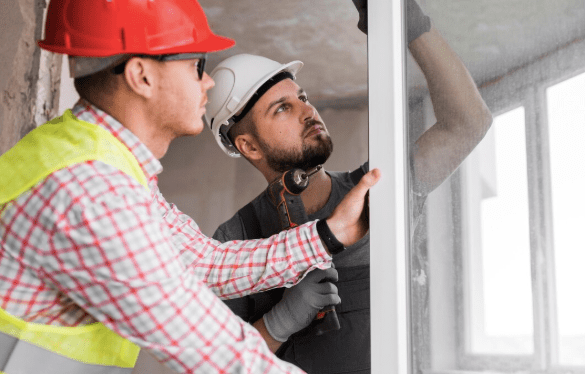
Window selection in a home addition often gets decided almost entirely on appearance and budget. But if your addition sits closer to a street, a neighbor’s driveway, an HVAC unit, or any consistent noise source, soundproof windows deserve serious consideration before you default to standard double-pane.
True soundproof windows use laminated glass, which sandwiches a layer of polyvinyl butyral between two glass panes. This is different from standard double or triple-pane construction. The laminated layer absorbs sound waves rather than just blocking them, and the difference in a room with active outside noise is substantial. Many homeowners who’ve upgraded describe it as the single most impactful quality-of-life change in their renovation.
From a practical standpoint, they also add a meaningful layer of security since laminated glass is significantly harder to break through than standard glass. The cost premium over standard windows is real but not extreme, especially if you’re only applying them to the rooms or exposures where noise is actually an issue.
Spray foam insulation in the exterior walls of a new addition, rather than traditional batt insulation, creates a tighter thermal envelope and dramatically reduces air infiltration. It costs more upfront and pays you back in energy bills and comfort for the life of the home. In climate zones with hot summers or cold winters, it’s rarely a decision people regret.
For interior finishes, the material that tends to get underestimated is flooring. Specifically, how the new flooring connects to the existing home. If you’re adding onto a space with hardwood, matching the species, stain, and plank width precisely matters more than most people realize. Almost right transitions are more visually disruptive than transitions that are intentionally different. Make a decision, commit to it, and don’t let anyone talk you into “close enough.”
A home addition is a long-term investment in how you live. The materials you choose now will be the materials you maintain, enjoy, or regret for the next twenty years. Taking the time upfront to understand what you’re working with, what you’re building on, and what you’re installing is the most valuable thing you can do before the permits get pulled.
For more home, lifestyle, and living inspiration, visit Divine Lifestyle and explore the Home + Entertaining section for ideas that fit the way real families actually live.
Author Bio: Stephanie Rogers is a freelance writer who enjoys sharing her love for writing with others. She primarily writes about traveling, music, and design ideas. She lives in her hometown of Phoenix, Arizona, where she enjoys spending time with her husband golfing and traveling. Stephanie’s work as a freelance writer can be found on Building Product Advisor, a construction industry resource site.
Set of 2 Parker Rectangular Boxes – Silver – Couture These striking rectangular boxes, crafted with hand-applied cracked eggshell and silver leaf, provide a stylish and practical storage solution for any room. Stack them...
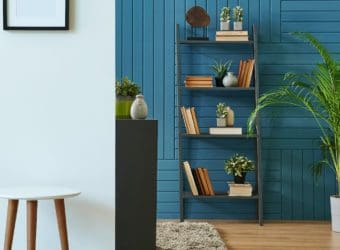
Big Impact: Elevate Your Home’s Style To advance the aesthetic look and feel of your home, you need to focus on interior design. This is an art that works to enhance the appeal of...

A scent diffuser machine is a device designed to disperse essential oils or fragrances into the air, creating a pleasant and inviting atmosphere. Whether used in homes or commercial spaces, these machines work by...

This What’s in my desk drawer? #linerup post is a sponsored conversation written by me on behalf of Carefree®. What’s in my desk drawer? #linerup As a working mother of three, there is no...